Vlatko Andonovski’s Coaching Journey: USWNT Era, Kansas City Current, and Legacy
Vlatko Andonovski’s career is a modern soccer story with a sharp pivot at every stage: immigrant player, indoor-league grinder, fast-rising NWSL coach, U.S. Women’s National Team manager, then a return to club leadership in Kansas City. If you’re trying to understand who he is beyond headlines—Olympics bronze, a World Cup disappointment, a club rebuild—his story makes the most sense when you see how consistently he’s chased structure, detail, and control in a sport that refuses to be controlled.
Who is Vlatko Andonovski?
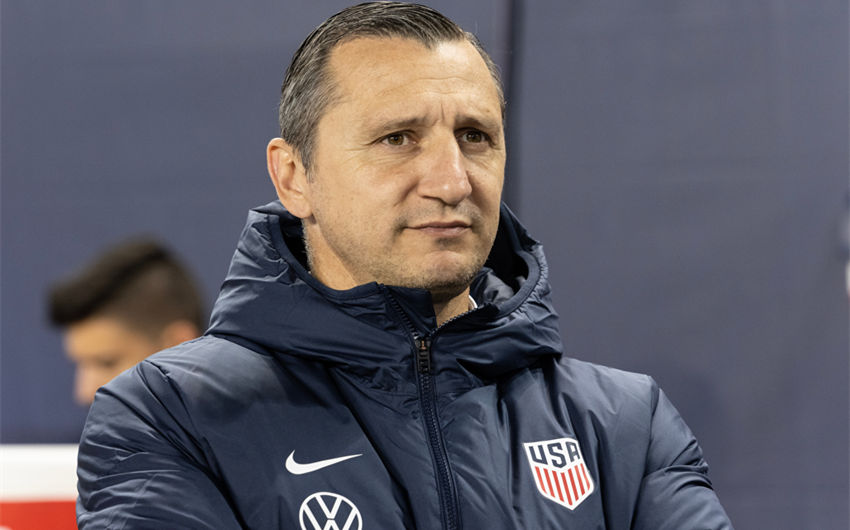
Vlatko Andonovski is a Macedonian-American soccer coach and former player best known for leading the United States women’s national team from 2019 to 2023. After leaving the national team role, he joined the Kansas City Current in the NWSL and served as head coach and sporting director before transitioning in late 2025 to focus fully on the club’s global sporting director role.
In simple terms: he’s a coach who built his reputation in club soccer, reached the highest-profile job in women’s international football, then returned to a front-office-and-vision role where his influence is measured less by weekly lineups and more by long-term roster building.
Early life: from Skopje to the United States
Andonovski was born in Skopje (in what is now North Macedonia) and later moved to the United States. That immigrant angle isn’t a soft “inspiring” footnote—it shaped how he approached everything. His path wasn’t built on being the most famous player in a glamorous league. It was built on adapting quickly, learning new environments, and grinding through a version of soccer life that was closer to survival than spotlight.
That background shows up in his coaching personality: methodical, intense about preparation, and more interested in systems than in vibes.
Playing career: a defender’s mindset and indoor soccer reality
As a player, Andonovski was a central defender, and that positional identity matters. Defenders see the game in relationships: spacing, timing, risk management, what happens when you lose the ball, how one mistake snowballs into a goal. Coaches with defensive roots often build teams that value structure and discipline, even when they want to play attacking soccer.
He also played significant indoor soccer in the United States, including time with clubs associated with Kansas City. Indoor soccer is chaotic and fast: tight spaces, constant transitions, repeated decision-making under pressure. If you want a crash course in tactical reaction time, indoor soccer will give it to you. That environment can hard-wire a coach to think in patterns—press triggers, movement cues, quick exploitation of space—which later becomes a coaching advantage.
Coaching beginnings: learning leadership before the spotlight
Andonovski’s early coaching work included roles connected to the Missouri Comets, where he built experience in managing teams and shaping a culture. Those years are often overlooked because they weren’t glamorous, but they’re where many coaches actually become coaches: learning how to teach, how to motivate without over-talking, and how to manage the human side of a roster.
This is also where you start seeing the identity he’d carry into bigger jobs: he wants teams that are organized, aggressive in their decision-making, and accountable in their roles.
NWSL rise: FC Kansas City and a reputation for winning
Andonovski’s reputation exploded in the NWSL with FC Kansas City. The team became known for being well-coached, difficult to break down, and capable of controlling games with intelligent possession and coordinated movement. Success in a parity-driven league like the NWSL tends to expose the difference between “good ideas” and “good execution.” His teams executed.
What made him stand out wasn’t just results—it was the feeling that his teams had a plan, and the plan showed up consistently.
Reign FC: proving the approach travels
After Kansas City, Andonovski coached Reign FC (now OL Reign), another high-profile club environment with top talent and high expectations. This mattered because it tested whether his success was tied to one particular roster or one particular club ecosystem.
He remained effective, which strengthened the case that his coaching wasn’t a fluke—it was a repeatable method. That repeatability is exactly what national teams look for when they hire: they want someone who can build structure quickly in limited training time.
USWNT era: high expectations and a hard truth about cycles
In 2019, Andonovski became head coach of the U.S. Women’s National Team, taking over after a historic era. That’s one of the toughest jobs in world soccer because the expectations are not “compete.” The expectations are “win, and make it look inevitable.”
His tenure included major moments—most notably a bronze medal at the Tokyo Olympics (played in 2021). For many countries, an Olympic medal is a triumph. For the USWNT, it was a complicated outcome: a result that still felt like underperformance because of the program’s own standard.
Then came the 2023 Women’s World Cup, where the United States exited earlier than expected. The team’s elimination became one of the defining storylines of his national team run, and he stepped down afterward. The moment wasn’t just about one match. It became a referendum on style, roster choices, tactical flexibility, and whether the team had evolved enough as the global level rose.
The bigger context is this: women’s soccer changed fast during his tenure. The gap narrowed. Teams became tactically sharper and physically deeper. The USWNT was no longer playing in a world where talent alone erased planning mistakes. Every national team coach in that era got hit with the same reality: dominance isn’t permanent, and cycles don’t care about your résumé.
What people debate about his USWNT coaching
When fans argue about Andonovski, they usually circle a few themes.
Tactical identity. Supporters say he brought structure and tried to modernize the team’s approach. Critics say the team sometimes looked stuck between styles—wanting control but not always creating enough danger.
Player choices. With a deep pool, every omission becomes a headline. National team coaching is a constant negotiation between form, chemistry, roles, and big-tournament experience. His decisions became intensely scrutinized, especially at the World Cup.
Communication and pressure. The USWNT environment is unique: it’s a national team with celebrity-level attention. Every coach has to manage not just a roster, but a public narrative. Some coaches thrive in that glare. Others do their best work away from it.
None of this erases his achievements, and none of it means criticism is invalid. It simply means the job is designed to create loud opinions—because the margin between “legendary” and “not good enough” is often a single knockout match.
Kansas City Current: return to club soccer and a different kind of power
After leaving the USWNT role, Andonovski returned to the NWSL by joining the Kansas City Current in a dual role that combined head coach responsibilities with sporting leadership. It was a notable move because it placed him in a position to shape not only tactics but also the roster architecture—recruitment priorities, developmental pathways, and the long-term identity of the club.
Then, in November 2025, the Current announced that he would step away from day-to-day head coaching to focus fully on the sporting director side, shifting into a global sporting director role. The club moved to fill the head coaching position separately, with Chris Armas hired as head coach in early 2026.
This shift matters because it suggests something about Andonovski’s strengths and interests. Coaching is immediate: training sessions, lineups, substitutions, weekly pressure. Sporting leadership is strategic: building an organization that can win sustainably, not just survive the next match.
Coaching style: what you can usually expect from an Andonovski team
Even if you don’t obsess over tactics, you can often recognize his imprint:
Structure first. He values spacing, shape, and coordinated movement. Players have roles, and roles have responsibilities.
Controlled aggression. His teams can press and attack, but he typically wants pressing to be organized, not emotional.
Preparation. He’s known for detailed planning—how to exploit an opponent, how to manage match moments, how to reduce chaos.
Accountability. He expects players to do the job within the system, not freelance constantly for highlights.
That doesn’t mean his teams are always “boring” or always “rigid.” It means his default belief is that freedom works best when it sits on top of a clear foundation.
Quick facts
- Born: September 14, 1976
- Known for: Head coach of the USWNT (2019–2023)
- Club leadership: Kansas City Current (head coach and sporting director, then global sporting director)
- Major tournament highlight: Olympic bronze medal (Tokyo Olympics held in 2021)